

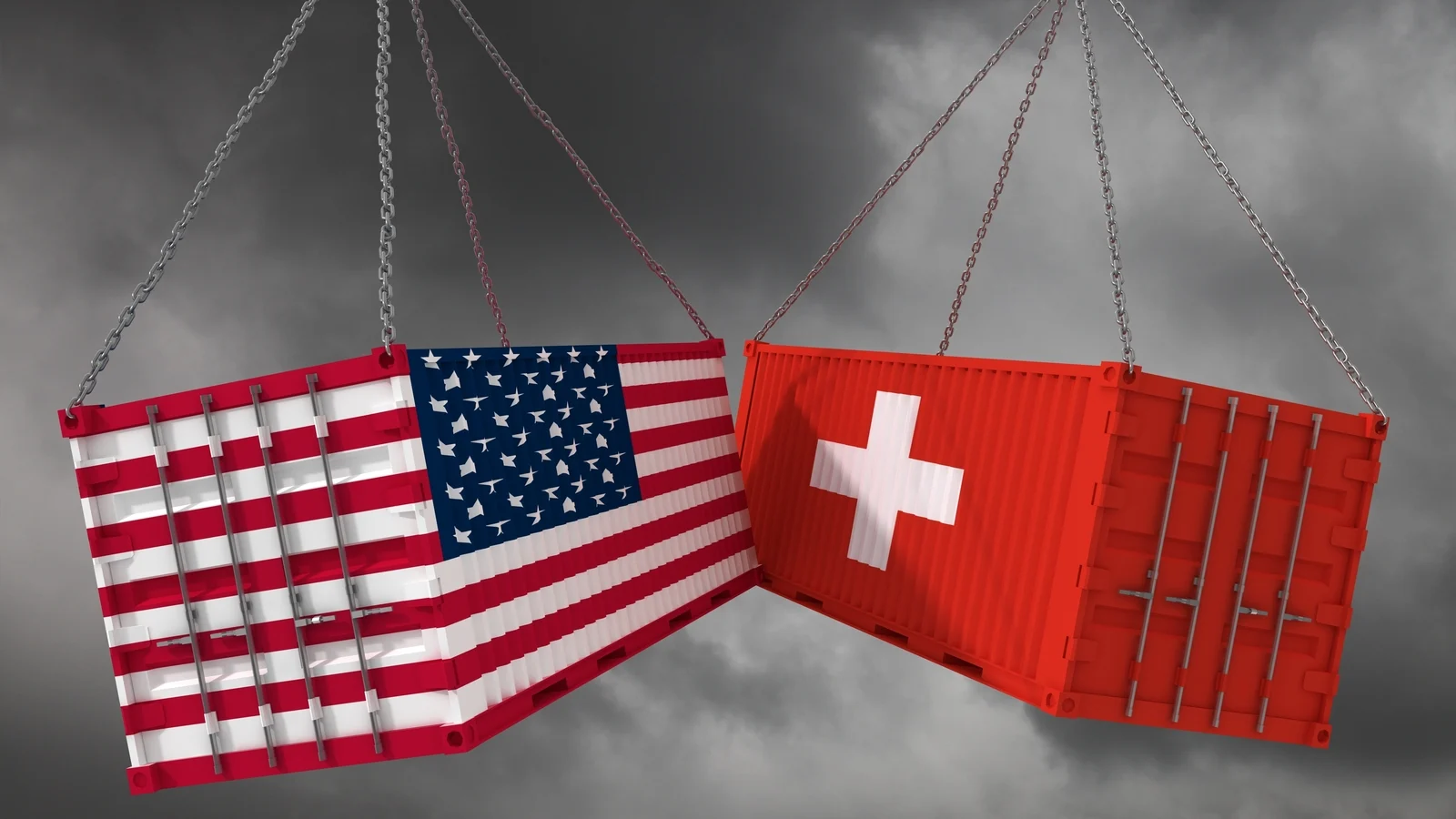
US Confirms Tariff Elements in Trade Deal with Switzerland: What Businesses and Investors Need to Know
US Confirms Tariff Elements in Trade Deal with Switzerland
In a significant development for international trade policy, the US confirms tariff elements in trade deal with Switzerland, signalling progress toward enhanced economic cooperation between the United States and one of Europe’s key trading partners. According to Reuters, U.S. Trade Representative Katherine Tai and Swiss officials have finalised key elements of a bilateral agreement that includes tariff provisions designed to reduce barriers and stimulate cross-border commerce. (reuters.com)
The announcement marks an important step in strengthening transatlantic economic ties, with implications for exporters, manufacturers, and consumers on both sides of the Atlantic. This article explores the key features of the agreement, its strategic context, and its broader implications for global trade.
What the Trade Deal Includes
At its core, the US confirms tariff elements in trade deal with Switzerland relates to agreed changes or eliminations of tariffs on selected goods and sectors, reflecting commitments to promote fair competition and market access. Key features include:
-
Tariff reductions: Both the U.S. and Switzerland have agreed to lower or eliminate tariffs on a range of industrial and agricultural products.
-
Trade facilitation provisions: Measures to streamline customs procedures and reduce non-tariff barriers that impede business operations.
-
Standards cooperation: Joint efforts to align regulatory standards to reduce compliance costs for exporters.
-
Dispute resolution mechanisms: Frameworks to address disagreements efficiently and predictably.
Officials from both nations emphasised that the agreement does not yet constitute a full free trade agreement (FTA) but represents a substantive step toward deeper economic integration.
For an overview of how tariff reductions can influence trade, refer to the World Trade Organization (WTO) Trade Policy Review (External resource: WTO – Tariffs and Trade Policy — https://www.wto.org/english/tratop_e/tpr_e/tpr_e.htm)
Background: U.S.–Switzerland Economic Relations
The United States and Switzerland have long enjoyed robust economic ties. Switzerland’s strategic role as a European financial hub and innovator in sectors such as pharmaceuticals, machinery, and precision instruments makes it a valuable partner for the United States.
Bilateral trade between the two countries has remained resilient:
-
The United States is one of Switzerland’s top export destinations outside the EU, with significant trade in machinery, chemicals, and agricultural products.
-
Swiss investments in the U.S. span manufacturing, research and development, and financial services.
-
U.S. firms benefit from Swiss expertise in areas such as biotechnology and advanced engineering.
For detailed trade statistics between the U.S. and Switzerland, the United States International Trade Administration (ITA) country profile offers comprehensive data (External resource: US ITA – Switzerland Trade Profile — https://www.trade.gov/country-commercial-guides/switzerland)
Strategic Importance of Tariff Agreements
Tariffs are taxes imposed on imported goods. Lowering or removing tariffs can have several economic benefits:
-
Reduced costs for importers and exporters: Lower tariffs can make products more competitive in foreign markets.
-
Increased trade flows: Firms are more likely to engage in cross-border commerce when tariff costs are predictable and manageable.
-
Consumer benefits: Reduced tariffs can lead to lower prices for consumers on imported goods.
-
Strengthening economic ties: Tariff agreements often serve as building blocks toward broader trade cooperation.
The US confirms tariff elements in trade deal with Switzerland underscores both countries’ shared interest in facilitating smoother trade and economic engagement.
For an explanation of how tariffs function in global trade, visit the International Monetary Fund (IMF) guide on trade policies (External resource: IMF – Trade and Tariffs — https://www.imf.org/external/np/exr/ib/2001/110801.htm)
Reactions from Industry and Government Leaders
Industry stakeholders and government leaders in both countries have largely welcomed the tariff agreement:
-
U.S. exporters see opportunities to expand market access for agricultural products and manufactured goods.
-
Swiss firms anticipate more predictable trade conditions that could strengthen investment decisions and supply chain integration.
-
Trade associations emphasised that tariff certainty is essential for long-term planning and competitiveness in international markets.
In a joint statement, officials noted that while the agreement is not comprehensive, it lays important groundwork for ongoing negotiations on broader trade cooperation.
For context on how trade agreements are negotiated and implemented, refer to the Office of the United States Trade Representative (USTR) trade agreements page (External resource: USTR – Trade Agreements — https://ustr.gov/trade-agreements)
Implications for Agriculture and Manufacturing
Specific sectors stand to benefit from the tariff elements confirmed in the deal:
Agriculture
Agricultural exports often face significant tariff barriers that can hinder competitiveness. With tariff reductions:
-
U.S. agricultural producers could access Swiss markets with lower cost burdens.
-
Swiss food and beverage exports may find greater traction in the United States.
Manufacturing and Technology
Industrial manufacturers and high-tech sectors are expected to see benefits from streamlined tariff structures and regulatory cooperation:
-
Machinery and industrial goods may become more competitively priced in export markets.
-
Regulatory alignment can reduce compliance costs for technology and precision instrument manufacturers.
For an analysis of how trade agreements impact the agriculture sector, see the Organisation for Economic Co-operation and Development (OECD) agriculture and trade report (External resource: OECD – Agriculture and Trade — https://www.oecd.org/agriculture/topics/trade/)
What This Means for Future Trade Negotiations
While the current tariff elements agreement stops short of a full free trade agreement, analysts view it as a stepping stone toward deeper engagement.
Potential next steps include:
-
Expanding tariff reductions to additional goods and services sectors.
-
Negotiating broader market access provisions beyond tariffs, such as investment protections.
-
Cooperation on digital trade and intellectual property protection standards.
-
Linking bilateral initiatives with broader multilateral frameworks, such as WTO commitments.
As both countries evaluate the economic benefits of further integration, the current agreement could influence how they approach future trade diplomacy.
For a broader discussion on trade negotiations and economic integration, visit our internal trade policy overview:
https://infinitestandard.com/trade-policy-and-economic-integration
Challenges and Considerations
Despite optimism, there are challenges ahead:
-
Domestic political considerations: Trade agreements often face scrutiny from stakeholders concerned about job displacement or sectoral competition.
-
Regulatory differences: Aligning standards between countries with distinct regulatory regimes can be complex.
-
Global economic uncertainties: Fluctuations in global growth, supply chain disruptions, or geopolitical tensions may influence trade dynamics.
Addressing these challenges will require sustained dialogue and strategic planning by policymakers and industry leaders.
For insight into how trade agreements affect domestic industries, see the Peterson Institute for International Economics (PIIE) trade impact analysis (External resource: PIIE – Trade Agreements and Domestic Impact — https://www.piie.com)
Conclusion
The fact that the US confirms tariff elements in trade deal with Switzerland marks a meaningful development in bilateral economic relations and a clear signal of both nations’ commitment to facilitating trade and reducing barriers. While not a comprehensive free trade pact, the tariff agreements provide immediate benefits for exporters, investors, and consumers, and lay the foundation for more ambitious cooperation in the future.
As global economic dynamics continue to evolve, such bilateral initiatives will play an important role in shaping resilient and interconnected trade relationships that serve mutual economic interests.