


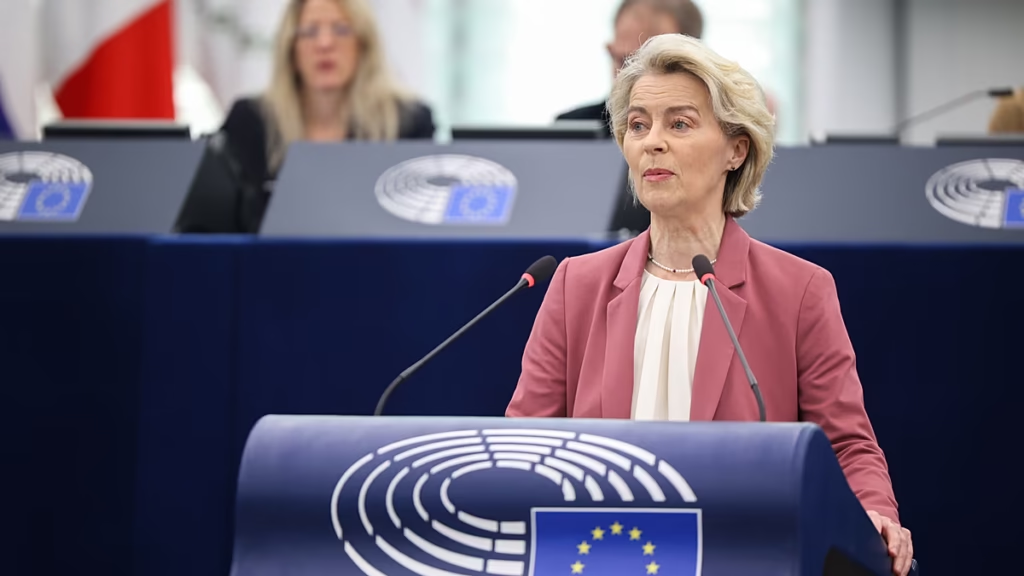
Understanding the EU Dangerous Reality World Order Ursula von der Leyen Described
In a sobering address to the European Parliament, European Commission President Ursula von der Leyen highlighted the EU dangerous reality world order facing Europe as leaders prepare for a pivotal summit in Brussels. Her remarks underscore the urgency confronting the European Union (EU) as global power dynamics shift and geopolitical risks intensify. Newswav+1
With strategic questions about defense, economic stability, and support for Ukraine on the table, von der Leyen’s warning sets the tone for discussions among the 27 member states. euronews
The Context of von der Leyen’s Statement
As the EU grapples with a more fragmented international order, von der Leyen was quoted saying that Europe can no longer “indulge in nostalgia” and must confront today’s realities with clear-eyed determination. Newswav Referring to a world that has become “dangerous and transactional”, she emphasized that traditional security assurances and economic frameworks are no longer sufficient to safeguard Europe’s future. European Commission
This recognition of a changing global landscape reflects deeper strategic concerns — from defense autonomy to economic resilience and diplomatic positioning. Reuters
Key Elements of the EU Dangerous Reality World Order Debate
Below are the core aspects shaping discussions at the EU summit and reflecting von der Leyen’s remarks on the EU dangerous reality world order:
-
Shifting Security Landscape – The EU faces growing pressure to bolster its defense capabilities and reduce reliance on external actors for security. This includes advancing initiatives like Readiness 2030 — a plan to enhance EU military readiness in the face of geopolitical threats. Wikipedia
-
Ukraine’s Continued Struggle – The war in Ukraine remains central to EU strategic planning. Leaders are debating how to sustain financial and military support while managing legal and economic risks tied to using frozen Russian assets to back loans and reparations. AP News+1
-
Transatlantic Relations Under Strain – Relations with the United States are increasingly unpredictable, prompting calls within the EU to assume greater responsibility for its own defense and strategic autonomy. Reuters+1
-
Economic and Trade Pressures – Global trade imbalances, particularly with China, and debates over major deals like the EU-Mercosur agreement are reshaping the bloc’s economic priorities. Yahoo News
-
Institutional Cohesion Challenges – Divergent views among member states on defense spending, fiscal policy, and energy dependencies highlight the complexity of forging unified policy decisions. Corporate Europe Observatory
Why This Matters for Europe
The EU dangerous reality world order is not just a rhetorical phrase. It captures a set of structural challenges that demand strategic adaptation across political, economic, and security dimensions. Europe’s ability to respond effectively will shape not only the outcome of this summit but also the bloc’s long-term global role.
For more background on how the EU is strengthening its defense posture and strategic autonomy, refer to this analysis on Readiness 2030 and evolving European defense cooperation. Wikipedia
Additionally, insights into transatlantic dynamics can be explored in the article on United States–European Union relations and its implications for defense and diplomatic strategies. Wikipedia
Takeaways Ahead of the Brussels Summit
-
EU Dangerous Reality World Order is now a central theme driving EU policy debates in 2025, reflecting geopolitical instability and shifting alliances.
-
Leaders must balance immediate security needs with long-term economic and diplomatic strategies.
-
The summit will test the EU’s capacity to act cohesively and assertively.