

EU Races to Win Over Italy on Mercosur Trade Deal: Lawmaker Signals Urgency and Diplomatic Push
EU Races to Win Over Italy on Mercosur Trade Deal as Tensions Mount
Brussels is intensifying diplomatic efforts as the EU races to win over Italy on Mercosur trade deal, aiming to secure endorsement from a crucial member state ahead of decisive European Union votes. According to Reuters, senior EU officials and lawmakers have acknowledged that obtaining Italy’s backing is essential for moving forward with one of the European bloc’s most significant trade agreements in years. (reuters.com)
Italy’s reservations center on agricultural protections, market access safeguards, and equitable terms for European producers. With these concerns in play, the EU is now racing to address objections and negotiate assurances that can bridge political divides across member states.
What Is the Mercosur Trade Deal?
The EU–Mercosur Association Agreement is a longstanding proposed free trade pact between the European Union and the Mercosur bloc, which comprises Argentina, Brazil, Paraguay, and Uruguay. The agreement aims to:
-
Eliminate tariffs on a significant portion of goods traded between the EU and Mercosur countries
-
Expand market access for European industrial and agricultural exports
-
Strengthen economic ties with South America’s largest trading partners
For context on the scope and background of this agreement, the EU–Mercosur Association Agreement page provides comprehensive details:
https://en.wikipedia.org/wiki/EU%E2%80%93Mercosur_Association_Agreement
This trade deal has been under negotiation for decades and represents an economic opportunity for both regions, but political obstacles have repeatedly delayed final approval.
Why the EU Is Racing to Win Over Italy
Italy has emerged as a pivotal member state with reservations about the deal’s impact, particularly in the agricultural sector. Several Italian leaders and lawmakers have expressed concern that lower duties on imported agricultural products — such as beef — could undermine local farmers already facing economic pressures.
Key Italian concerns include:
-
Agricultural safeguards: Calls for stronger protections to prevent market disruption for Italian producers
-
Reciprocity guarantees: Ensuring that access for European businesses in Mercosur countries is balanced and fair
-
Environmental and labour standards: Assurances that Mercosur partners will uphold high standards that align with EU norms
These objections have made Italy a linchpin in the ratification process. Without Italy’s support, the agreement faces a stalemate, triggering intensified diplomatic engagement from EU leaders.
This situation mirrors broader EU trade policy dynamics, where member states balance national sector interests with collective economic goals. For a deeper understanding of EU foreign trade strategies, the European Commission’s trade policy page offers authoritative insight:
https://commission.europa.eu/business-economy/trade_en
What Italian Policymakers Are Saying
Italy’s stance reflects both political and economic considerations. National leaders argue that any trade deal must safeguard key industries and uphold the interests of domestic producers. A senior lawmaker cited in the Reuters article emphasised that the EU is actively engaged in efforts to “win over Italy” by addressing specific concerns.
Italian policymakers have focused on:
-
Reinforcing protections for sensitive agricultural sectors
-
Seeking legally binding clauses to enforce reciprocal market access
-
Demanding clarity on quotas and safeguards before committing to a signature
This position places Italy at the centre of intra-EU negotiations, with Brussels working to craft compromise solutions that resonate with national priorities.
Broader EU Dynamics on the Mercosur Trade Deal
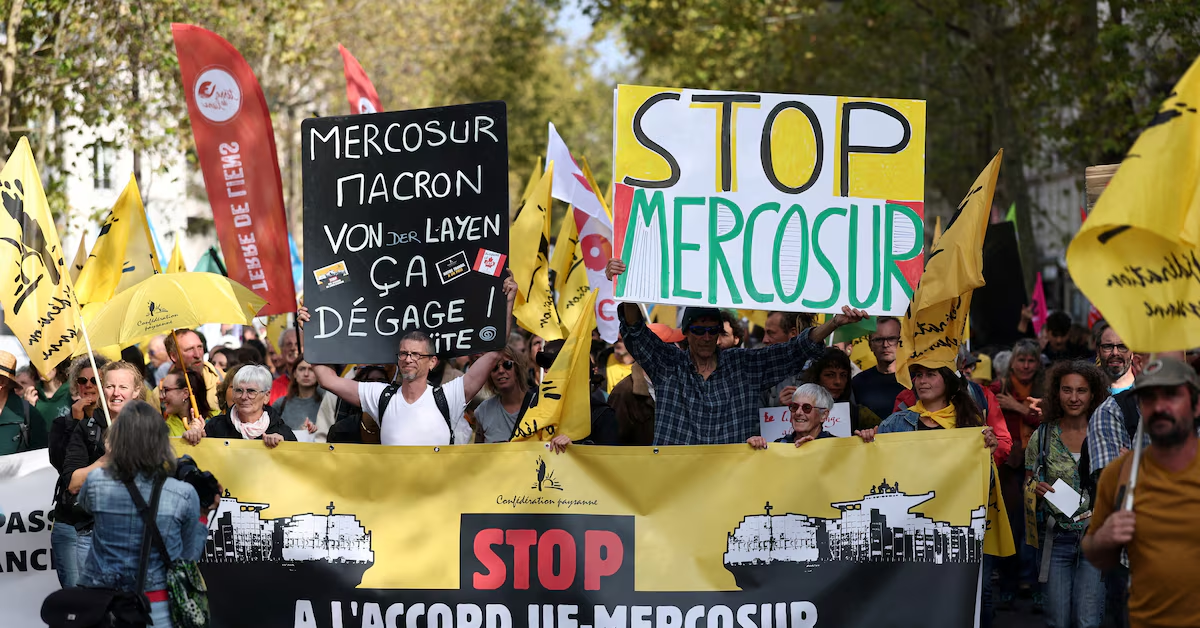
Italy is not alone in voicing reservations. Several EU member states, including France, Poland, and Hungary, have expressed similar concerns over protecting farmers and ensuring equitable trade terms. These differing national interests complicate efforts to secure unanimous approval.
In response, the European Commission and EU negotiators have employed several strategies:
-
Reaffirming commitments to high environmental and labour standards in trade deals
-
Offering targeted support mechanisms for sectors deemed vulnerable to competition
-
Proposing enhanced monitoring frameworks to ensure compliance with agreement terms
Trade Commissioner responsibilities include balancing internal union cohesion while advancing ambitious external trade agreements. For more on EU trade governance structures, the European Union’s official portal outlines institutional roles:
https://europa.eu/
What Happens if Italy Withholds Support?
The consequences of Italy withholding its support for the Mercosur deal could be significant. In order for the agreement to move forward, it must clear several approval stages:
-
Ratification by the European Parliament
-
Unanimous consent from all EU member states
Without Italy’s backing, the timeline for final approval could face indefinite delays, undermining business confidence and potentially weakening the EU’s negotiating leverage in global trade talks.
Industry stakeholders — particularly in agriculture and manufacturing — are closely watching developments. Many businesses have invested in planning for expanded trade opportunities, and prolonged uncertainty may affect supply chain strategies and investment decisions.
For comprehensive insight into how trade agreements are ratified and their economic implications, the World Trade Organization’s resources on trade facilitation offer valuable context:
https://www.wto.org/trade-topics/trade-agreements
The Political Context
Domestic politics in Italy further shape the debate. Agricultural unions and farming associations have mobilised around calls for rigorous protections, citing fears that Mercosur imports could undercut European standards on food safety and labour conditions. Opposition parties have leveraged the issue in broader political debates about globalisation, sovereignty, and economic policy.
EU leaders are conscious that any trade agreement must not only meet economic-rational criteria but also withstand political scrutiny at home. Successful ratification therefore depends on securing broad public and political support within member states — a complex undertaking in the context of diverse national priorities.
Potential Compromises and Next Steps
To address the challenges facing the EU races to win over Italy on Mercosur trade deal, negotiators are considering a range of possible compromises:
-
Strengthening safeguard clauses that activate tariffs or quotas if market disruption occurs
-
Tiered implementation timelines to allow sensitive sectors time to adjust
-
Increased technical cooperation programmes between EU and Mercosur partners
These approaches aim to protect domestic industries while preserving the underlying economic benefits of the agreement.
The strategic importance of the Mercosur deal for EU trade policy — particularly in diversifying markets and strengthening ties with South America — ensures that Brussels will continue its diplomatic push in the coming weeks.
Conclusion
The EU races to win over Italy on Mercosur trade deal highlights the intricate balance between expanding international trade and managing domestic economic interests within the European Union. Italy’s pivotal role showcases the challenges of forging consensus among diverse member states while advancing comprehensive trade agreements that carry global significance.
As negotiations persist, the resolution of these issues will not only shape the future of EU-Mercosur relations, but also offer insights into how the EU navigates internal diversity in pursuit of unified external engagement.