

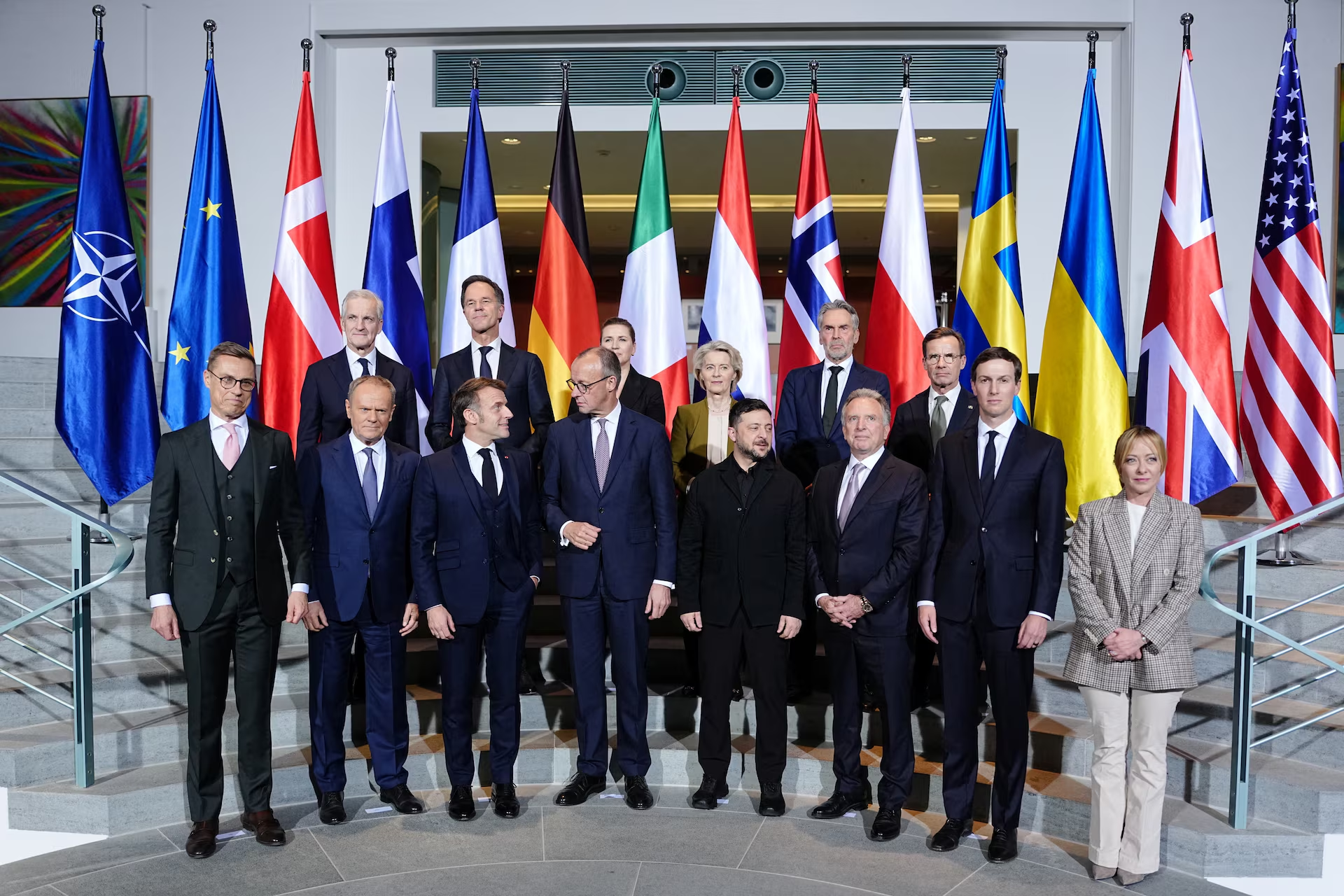
EU Summit Leaders Meet to Secure Ukraine Financing: Key Decisions and Diplomatic Stakes
EU Summit Leaders Meet to Secure Ukraine Financing: Negotiations Intensify in Brussels
European Union leaders convened in Brussels as EU summit leaders meet to secure Ukraine financing for the years 2026 and 2027, focusing on how to sustain Kyiv’s economic and defence needs amid the ongoing war with Russia. Diplomatic efforts are directed at reaching a consensus on funding mechanisms, legal frameworks, and political alignment within the bloc. The summit reflects the EU’s broader commitment to Ukraine’s stability, but also reveals deep divisions over the most viable way to provide long-term support. Reuters
The summit’s outcomes will likely influence not only Ukraine’s economic resilience but also the EU’s role as a geopolitical actor on the global stage.
Why Ukraine Financing Is on the Summit Agenda
Ukraine’s financial situation remains precarious as it continues to confront Russia’s military aggression. Economic forecasts show that Ukraine will face significant budget deficits without substantial international support. According to the International Monetary Fund, Ukraine could require over €135 billion in financing for 2026–27 to meet essential government and defence expenditure needs. Reuters
With diminishing U.S. aid and continued reliance on European and allied funding, the EU summit represents a critical juncture for European leaders to agree on a strategy that ensures continuity of support.
Key Proposals Under Consideration
At the heart of the EU summit leaders meet to secure Ukraine financing discussions are several funding options, each presenting unique legal and political considerations:
Frozen Russian Assets Proposal
One of the most debated proposals involves utilising the estimated €210 billion in frozen Russian central bank assets — predominantly held by Belgium — as collateral to back a so-called “reparation loan” to Ukraine. The idea is that Ukraine would receive substantial financing now, with repayments contingent on future compensation from Russia for war damages. Reuters
Belgium’s reluctance to approve this plan stems from concerns about legal liabilities, the risk of Russian retaliation, and potential impacts on confidence in the euro if sovereign assets are used as guarantees. Reuters
Bond Issuance on Financial Markets
An alternative route is for the EU to collectively issue bonds on international financial markets, similar to strategies used during the COVID-19 pandemic’s economic recovery period. However, this approach would require unanimous agreement among all EU member states — a tall order in the face of political differences, particularly with Hungary and Slovakia expressing resistance to joint borrowing. AP News
Hybrid or Transitional Funding Mechanisms
Officials have also considered hybrid models that combine asset-backed loans, market borrowing, and direct state contributions to balance financial risk and political feasibility. Some proposals include short-term bridging funds until a more comprehensive long-term EU budget is enacted. Reuters
Reactions and Political Dynamics
The European Commission, led by President Ursula von der Leyen, has emphasised the urgency of reaching a financing agreement before early 2026 to prevent a funding gap that could destabilise Ukraine’s economy. Von der Leyen’s strategic communications underscore that failure to secure financing could have dire consequences for Ukraine’s ability to sustain defence operations and broader economic activity. Reuters
Despite this urgency, several member states are cautious. Belgium remains a decisive opponent to the frozen assets proposal unless legal guarantees are put in place. Meanwhile, nations such as Hungary have repeatedly opposed collective debt mechanisms, complicating efforts to adopt unanimous decisions.
Some EU countries, including Italy and Slovakia, have yet to formally commit to specific plans, reflecting broader concerns about domestic political pressure, economic risk, and diplomatic repercussions. AP News
Diplomatic Implications and EU Unity
The EU summit leaders meet to secure Ukraine financing context extends beyond economic support. The negotiations reflect broader geopolitical tensions and the EU’s role in European security architecture. With U.S. support fluctuating, European leaders are under pressure to demonstrate strategic autonomy and solidarity with Kyiv.
Russia’s ongoing conflict with Ukraine continues to shape regional security discussions. Political rhetoric from the Kremlin underscores the sensitivity of decisions made at the summit, and the international community’s expectations for sustained support. The Guardian
The EU’s decisions could also influence wider global financial and diplomatic relations, including cooperation with allies such as the United Kingdom, Canada, and Norway, who have been mentioned as potential partners in covering portions of Ukraine’s financial needs. AP News
Broader Economic and Social Impact
Securing stable financing for Ukraine has ramifications for both Ukrainian citizens and broader European markets. Continued support can help:
-
Maintain public services and essential infrastructure in Ukraine
-
Support Ukraine’s integration into European economic and governance structures, as outlined in its EU accession progress reports Enlargement and Eastern Neighbourhood
-
Stabilise regional economic activity and reduce displacement pressures
However, delaying or failing to approve comprehensive funding could stall reconstruction efforts, weaken confidence in EU commitments, and create economic instability both inside and beyond Ukraine.
Looking Ahead
As EU summit leaders meet to secure Ukraine financing, the clock is ticking. European Council President António Costa and other senior officials have signalled readiness to continue negotiations beyond scheduled sessions until an agreement is reached.
Key decisions in the coming days will not only determine the shape of financial support for Ukraine but also signal the EU’s capacity to act collectively in a time of geopolitical strain. The outcomes are likely to be watched closely by international partners, global markets, and populations directly affected by the war in Ukraine.